
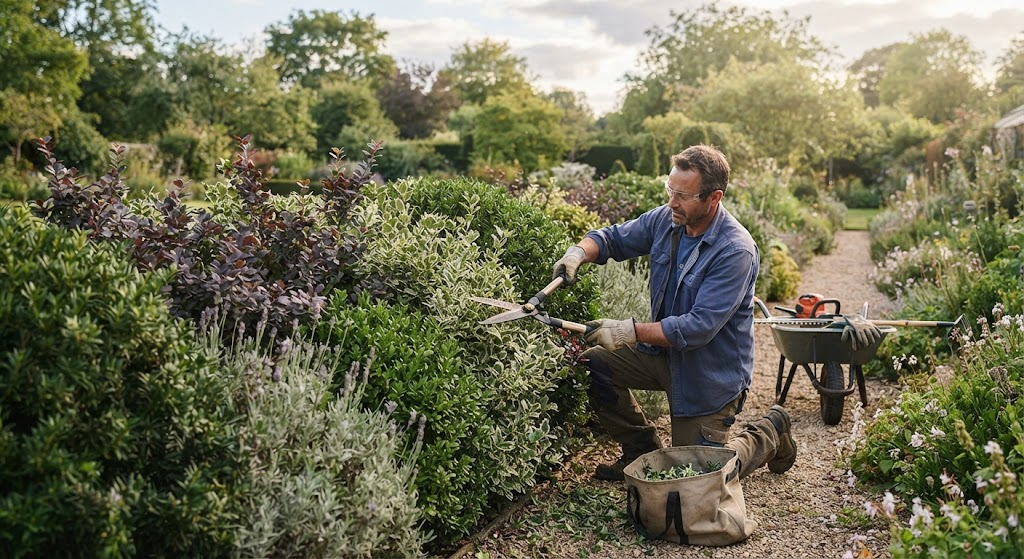
Effective shrub hedging is therefore less about cutting every plant into the same shape than about choosing the right species and caring for it at the right time. A flowering deciduous hedge, a year-round evergreen screen, and a clipped formal border each call for different techniques. Understanding those differences helps protect plant health while keeping maintenance manageable.
Common Shrub Species for Hedging
When considering hedging options, it’s important to choose the right shrub species that will thrive in your environment. Here are some of the most popular varieties:
Evergreen Shrubs
Evergreen shrubs are favored for their ability to provide year-round privacy and protection. They maintain their foliage throughout the seasons.
- Boxwood: Known for its dense growth and versatility, boxwood can be shaped easily, making it ideal for formal hedges.
- Holly: With its glossy leaves and bright berries, holly not only serves as an effective hedge but also adds seasonal color.
- Pine: Various species of pine can create a natural privacy screen, offering a rustic look while being low-maintenance.
Deciduous Shrubs
Deciduous shrubs lose their leaves in winter, making them suitable for those who prefer a dynamic landscape that changes with the seasons.
- Privet: Fast-growing and hardy, privet is often used for creating dense hedges that can be easily trimmed to shape.
- Forsythia: Known for its vibrant yellow flowers in spring, forsythia serves as an excellent choice for a flowering hedge.
- Spiraea: This shrub offers a variety of colors and forms, making it a popular option for informal hedges and borders.
Understanding Growth Patterns
Each shrub species exhibits distinct growth patterns, which can significantly influence your hedging strategy. Recognizing these patterns ensures effective maintenance and optimal growth.
Growth Rate
The growth rate of shrubs can vary widely, impacting how quickly a hedge can fill in and provide the desired privacy or aesthetic appeal.
- Fast-growing shrubs: Species like privet and Leyland cypress can provide quick coverage, making them ideal for urgent landscaping needs.
- Slow-growing shrubs: Boxwood and holly tend to grow more slowly, requiring patience but offering longevity and dense foliage.
- Medium-growing shrubs: Shrubs like spiraea fall in between, providing a balance of speed and fullness.
Habit and Shape
The natural habit and shape of a shrub can influence the overall appearance of your hedge. Understanding these characteristics can help in planning for effective pruning and shaping.
- Columnar shrubs: Such as junipers, provide a narrow, upright form, perfect for tight spaces or formal gardens.
- Rounded shrubs: Varieties like hydrangeas offer a fuller, rounded shape, ideal for informal hedges that blend into the landscape.
- Spreading shrubs: Willows and certain viburnums can create a wider hedge, filling out areas quickly while offering a more natural look.
Best Practices for Hedging Maintenance
Proper maintenance is key to ensuring that your hedges thrive and contribute positively to your landscape. Here are some best practices:
Regular Pruning
Pruning is essential for maintaining the health and shape of your hedges. Different shrubs may require varied pruning techniques.
- Timing: Most shrubs benefit from pruning in early spring or late winter, before new growth begins.
- Techniques: Use sharp, clean tools to make precise cuts, promoting healing and minimizing damage.
- Frequency: Regular trimming every year helps maintain the desired shape and encourages denser growth.
Soil and Fertilization Needs
Understanding the soil and fertilization requirements of your chosen shrubs can lead to healthier growth and more robust hedges.
- Soil type: Most shrubs prefer well-draining soil; consider conducting a soil test to understand pH and nutrient levels.
- Fertilization: Use a balanced fertilizer in the spring to promote healthy growth and flowering.
- Mulching: Applying mulch around the base of your shrubs helps retain moisture and suppress weeds.
Conclusion
Understanding the various shrub species and their growth patterns is fundamental to successful hedging. By selecting the right plants and implementing best practices in maintenance, you can create a beautiful and functional landscape. For the best results, consider hiring a professional to help you with your hedging needs.


