
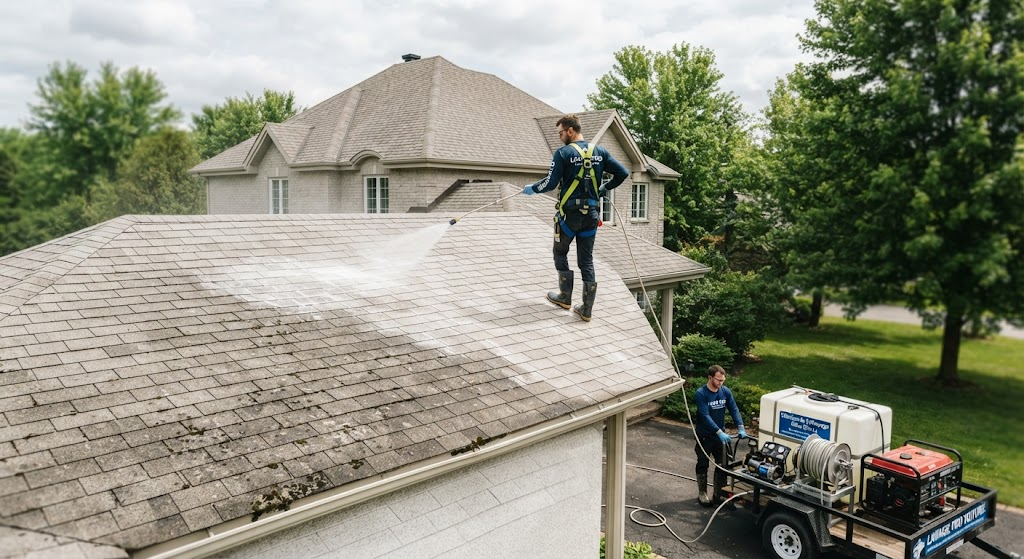
Professional roof cleaning is not a matter of choosing the strongest spray: it is about matching the method to the roofing material, the type of growth, and the conditions around the building. Soft washing uses low-pressure application and cleaning chemistry to address algae, moss, and other biological deposits, while pressure washing is reserved for surfaces able to withstand greater force. Understanding these differences helps protect shingles, manage runoff, and plan effective roof maintenance.
Roof Cleaning Methods And Their Differences
The defining distinction between soft washing and pressure washing is how each method removes contamination. Soft washing relies primarily on an appropriate cleaning solution delivered at low pressure; pressure washing uses water force to dislodge surface material.
For asphalt shingles, aggressive pressure can loosen protective granules and shorten service life. Guidance from the Asphalt Roofing Manufacturers Association supports low-pressure cleaning approaches for these roofs, while pressure washing is generally better suited to durable hardscapes than delicate roofing.
Soft Washing For Biological Growth
Black streaks on asphalt shingles are often associated with Gloeocapsa magma, a cyanobacterium. Lichens and moss can also take hold, particularly in damp or shaded conditions. A carefully selected biocidal treatment works on the organisms rather than relying on force to scrape them away.
The solution is applied at low pressure, commonly below 100 PSI at the nozzle for roof work. Dead growth may then weather away gradually with rainfall, so a clean appearance does not always emerge immediately. For additional background on roof cleaning methods, material compatibility is a useful place to start.
Pressure Washing For Suitable Surfaces
Pressure washing can be effective on robust surfaces such as some concrete areas, but it is not a universal roof-cleaning solution. High-velocity water can damage shingles, force moisture beneath some coverings, or harm coatings and flashing. The method should therefore be selected by surface type, not by the assumption that more force means a better result.
Cleaning Chemistry And Roof Protection
Soft washing commonly uses sodium hypochlorite as its active cleaning agent, with water as the carrier and a suitable surfactant to help the solution spread and cling. Working concentrations vary with the roof material, contamination, product instructions, and application system; trained contractors determine the mix rather than relying on a one-size-fits-all formula.
Concentration and contact time affect results, but stronger is not automatically safer or more effective. Chemical exposure can affect vegetation, painted finishes, and metal components, so runoff control and careful rinsing are part of professional roof care—not optional extras.
Responsible eco-friendly cleaning means reducing unintended effects through sound planning, not assuming that a cleaning chemical is harmless. Before work begins, professionals typically assess:
- Roof material, slope, existing damage, and the type of biological growth.
- Gutters, downspouts, nearby plants, water features, and runoff routes.
- Weather, wind, sunlight, and any local requirements for chemical use or discharge.
These checks support shingle protection while helping prevent overspray and uncontrolled discharge. Further guidance on roof maintenance planning can help property owners understand why cleaning should be considered alongside routine inspections.
Professional Equipment And Application
A professional soft wash setup is designed to handle both low-pressure delivery and chemical compatibility. Components may include a chemical-rated polyethylene tank, a suitable pump, resistant hoses and fittings, and nozzles selected to distribute the solution without excessive force.
Systems range from portable units for residential work to larger trailer or commercial configurations. Greater capacity can improve efficiency, but it also increases transport weight and the volume of solution that must be managed responsibly.
Application And Site Safeguards
Before treatment, a contractor identifies the roofing substrate, checks existing wear, and plans how to protect adjacent surfaces. During application, coverage and contact time are monitored; nearby vegetation and vulnerable materials may need pre-wetting, shielding, or fresh-water rinsing.
Afterward, equipment is flushed as appropriate, treated areas are inspected, and runoff is handled according to local rules. Where elevated access is required, fall protection and suitable work practices matter as much as the cleaning method itself.
Roof Cleaning Choices By Surface And Need
No single approach suits every roof. The comparison below summarizes common professional choices; the final decision depends on the manufacturer’s guidance, roof condition, and site constraints.
| Approach | Typical role | Main consideration |
|---|---|---|
| Soft washing | Biological growth on compatible roofing | Requires controlled chemistry and runoff management |
| Low-pressure rinsing | Removing residue where suitable | Must avoid driving water beneath roof materials |
| Pressure washing | Durable hard surfaces, not most shingles | Excess force can abrade or damage roofing |
For lasting professional roof care, cleaning should complement inspection and ongoing maintenance rather than substitute for repairs. A qualified roof-cleaning professional can assess the material, choose an appropriate approach, and provide recommendations tailored to the property.