
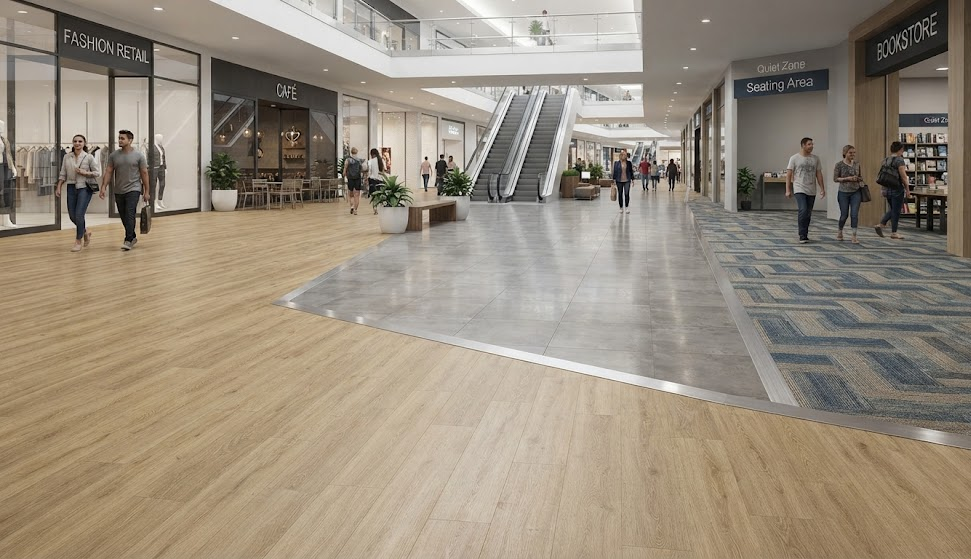
In the evolving landscape of commercial spaces, choosing the right flooring option is more than just a matter of aesthetic appeal. It involves factors such as durability, maintenance, safety, and even cost-effectiveness. Today, we delve into the merits of three commonly sought-after choices: vinyl, tile, and carpet.
Evaluating Durability Among Flooring Options
Durability is a primary concern when selecting commercial flooring. The chosen materials must withstand daily foot traffic while maintaining their appearance and functionality. Let’s analyze each flooring type based on durability.
Vinyl Flooring: Versatile and Resilient
Vinyl flooring, especially Luxury Vinyl Tile (LVT), stands out for its exceptional durability. It can resist scratches, moisture, and heavy foot traffic, making it suitable for various commercial settings like healthcare facilities, offices, and retail spaces. With a lifespan extending beyond 20 years when maintained properly, its cost-effectiveness becomes evident. Furthermore, its ability to mimic natural materials adds a touch of elegance to its practicality.
Tile Flooring: Long-lasting and Elegant
Tile flooring, particularly porcelain, secures its reputation through outstanding durability and low maintenance. This option is waterproof, stain-resistant, and can easily handle high-traffic areas. Its hard surface is ideal for locations like restaurants and showrooms where elegance meets function. Additionally, tile flooring’s longevity allows it to endure 20 years or more, making it a wise investment for any commercial space.
Carpet Flooring: Comfort with Caveats
Carpet flooring offers comfort and sound absorption, ideal for offices and hospitality settings. While it provides a warm atmosphere and is aesthetically pleasing, it typically requires more frequent maintenance to keep its appearance intact. Depending on the quality, commercial-grade carpets can last between 5 to 15 years. However, the need for regular cleaning and potential stain issues may detract from its practical appeal in high-traffic environments.
Assessing Maintenance Requirements
An essential aspect of maintaining a commercial space is the ease of cleaning and upkeep of the flooring. Let’s explore how each option fares in this regard.
Vinyl: The Low-Maintenance Champion
One of the most significant advantages of vinyl flooring is its ease of maintenance. Regular sweeping and occasional mopping suffice to keep the surface looking pristine. Additionally, any scratches or damage can often be easily repaired, contributing to its long-term value.
Tile: Sturdy Yet Requires Care
Tile flooring also scores high on the maintenance scale. It typically requires basic cleaning routines to prevent dirt build-up. While it’s resistant to stains, grouting may demand occasional deep cleaning to maintain its visual appeal. However, with proper care, tile can remain in excellent condition indefinitely.
Carpet: A Maintenance Intensive Choice
In contrast, carpet flooring, though appealing, demands rigorous maintenance. Regular vacuuming is essential, along with professional cleaning every few years to avoid allergens and maintain hygiene standards. For establishments expecting high foot traffic, this maintenance requirement can quickly become burdensome.
Safety Standards and Compliance
Meeting safety standards is vital in commercial environments. Each flooring type presents unique advantages in this aspect.
Vinyl: Slip-Resistant Options
Vinyl flooring often features slip-resistant textures, providing a safer surface for high-traffic areas. This characteristic is particularly crucial for spaces such as healthcare facilities or retail environments where accidents could lead to serious liability issues.
Tile: Beautiful But Potentially Slick
While tile flooring offers durability and an upscale appearance, it can be slippery, particularly when wet. It’s essential for businesses to select textured tiles or apply anti-slip coatings to mitigate risks, especially in public spaces.
Carpet: Comfort Meets Caution
Carpet flooring excels in providing a firm grip due to its fibrous surface, reducing fall risks. Its cushioning effect can also minimize injuries during accidents. However, continuous dampness can lead to mold growth, highlighting the importance of quick drying after spills.
Cost Analysis: Initial Investment and Long-Term Value
Understanding the financial aspect of each flooring option helps businesses align their choices with their budgets and long-term goals. Here’s a comparative overview of the initial costs versus long-term value.
Vinyl: Cost-Effective and Durable
Initially, vinyl flooring can be less expensive than tiles or high-quality carpets. With its extended lifespan and minimal maintenance requirements, it proves to be a wise economic choice over time, often providing significant savings.
Tile: Higher Initial Cost, Lasting Value
While tile flooring might require a more substantial upfront investment, its durability and low maintenance can offer excellent value. Businesses can expect tiles to last for many years, making the higher initial cost worthwhile for long-term operations.
Carpet: Budget-Friendly with Ongoing Costs
Although carpet flooring may have a lower upfront cost, the ongoing maintenance, and potential for early replacement can lead to greater expenses in the long run. Businesses must weigh these factors when considering the total cost of ownership.
Current Trends Influencing Flooring Choices
The commercial flooring market is constantly evolving, influenced by design trends and sustainability considerations. Businesses are increasingly seeking eco-friendly materials, reflecting a commitment to environmental responsibility.
Sustainable Offerings: A Growing Focus
Companies are leaning towards flooring options made from recycled materials or that support sustainable practices. This trend not only meets consumer demand for green products but also enhances brand image.
Design Innovations: Aesthetic Appeal
Innovative design features, such as patterned vinyl or textured tiles, allow businesses to express their brand identity through flooring. These aesthetic considerations influence consumer perceptions and can contribute to a brand’s overall success.
Ultimately, flooring choices are no longer solely about utility. Commercial flooring professionals can help businesses select combinations that balance durability, ease of maintenance, and design. Companies can therefore create inviting atmospheres that attract both employees and customers alike.