
House painting is not simply a choice between a brush, a roller, and a sprayer: each method shapes how quickly paint can be applied, how evenly it covers, and what the finished surface looks like. The best results come from matching the tool to the surface, the paint, and the level of detail required. Understanding the strengths and limits of each method makes it easier to work efficiently, manage edges, and achieve a durable, attractive Paint finish.
Choosing Brush, Roller, and Spray Techniques
Each painting method serves a different purpose, and many projects benefit from combining them. Before choosing Painting tools, consider the material, texture, size, and accessibility of the surfaces.
Using Brush Painting for Edges and Detail
Brush painting offers control around trim, corners, narrow sections, and irregular surfaces. An angled brush can guide paint neatly along an edge, while a smaller brush helps reach grooves and joints that broader tools may miss.
The technique is particularly useful for Cutting in around ceilings, windows, and door frames. Load the brush moderately, apply paint in strokes, and smooth the wet edge before it begins to dry; overloading can cause runs, while excessive brushing may leave visible marks.
Applying Roller and Spray Methods
Roller application covers broad, flat areas faster than a brush and works well on walls and ceilings. Choose a roller nap suited to the surface texture: a shorter nap leaves a smoother result, while a thicker one can reach into textured finishes.
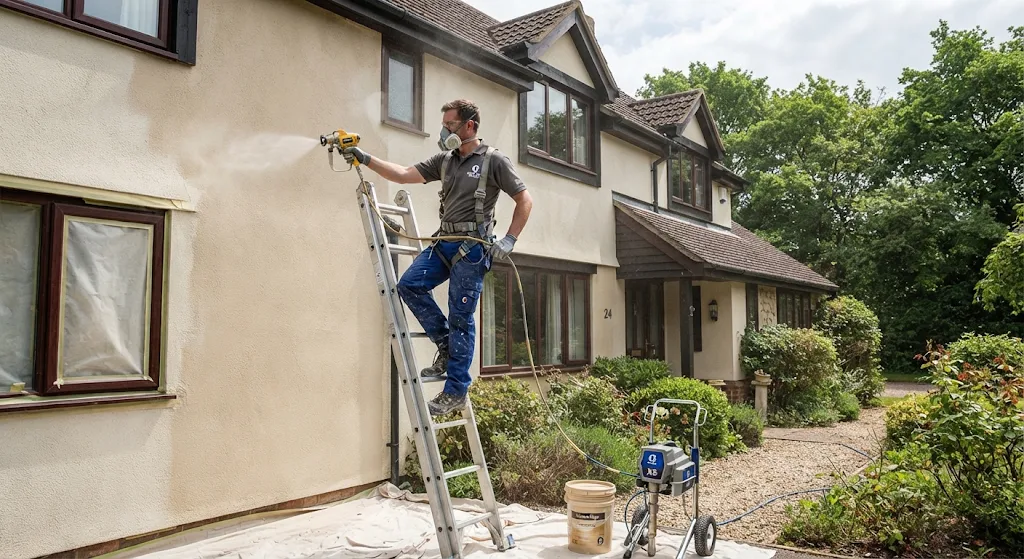
Spray painting can produce an even coat over large areas, complex profiles, or hard-to-reach surfaces. It requires masking and ventilation, along with practice maintaining a consistent distance and a controlled Spray pattern. A roller may still be needed for Back rolling, pressing paint into porous surfaces after spraying.
Preparing Surfaces for an Even Coat
The quality of the finish depends as much on preparation as on the application method. Remove dust, grease, and loose paint before starting. Fill holes or cracks, sand rough patches, and allow repaired areas to dry. Glossy surfaces may need light sanding so the new coating can adhere.
Protect floors, furniture, fixtures, and surfaces with drop cloths and masking materials. Use painter’s tape around trim and hardware, pressing down its edges to reduce paint seepage. Primer is useful on bare materials, patched areas, stains, or when changing from a dark colour to a lighter one. Selecting a compatible primer and paint helps create consistent coverage.
Matching the Technique to the Surface
Different areas of a home call for different approaches. Interior walls are easiest to cover with a roller, while ceilings may require an extension pole to maintain a steady application without ladder movements. Doors, cabinets, and detailed trim may benefit from a brush or a sprayer, depending on their shape and the desired finish.
Exterior surfaces introduce considerations. Siding, fences, and masonry vary in texture and porosity, so the tool must suit the material and coating. Spraying can cover textured siding efficiently, but windows, plants, and property need protection from overspray. Brushing may be preferable for smaller areas or detailed sections.
Maintaining Consistency During Application
Work in manageable sections and follow the paint manufacturer’s instructions for coverage, drying time, and recoat intervals. Keep a wet edge when rolling or brushing to reduce visible lap marks. Apply multiple thin coats when recommended rather than trying to achieve full opacity with one heavy layer.
Avoid painting in unsuitable conditions. High humidity, direct sunlight, strong wind, or low temperatures can affect drying and adhesion, particularly outdoors. Check the product label and weather forecast before beginning an exterior project.
Choosing the Right Method for a Lasting Result
Brushes, rollers, and sprayers each have a role in residential painting. A painter can use brushes for precision, rollers for efficient coverage, and sprayers for broad or intricate surfaces when controlled. Combining methods often gives a practical result. Careful preparation, suitable tools, and consistent application help create an attractive finish that stands up to everyday use.