
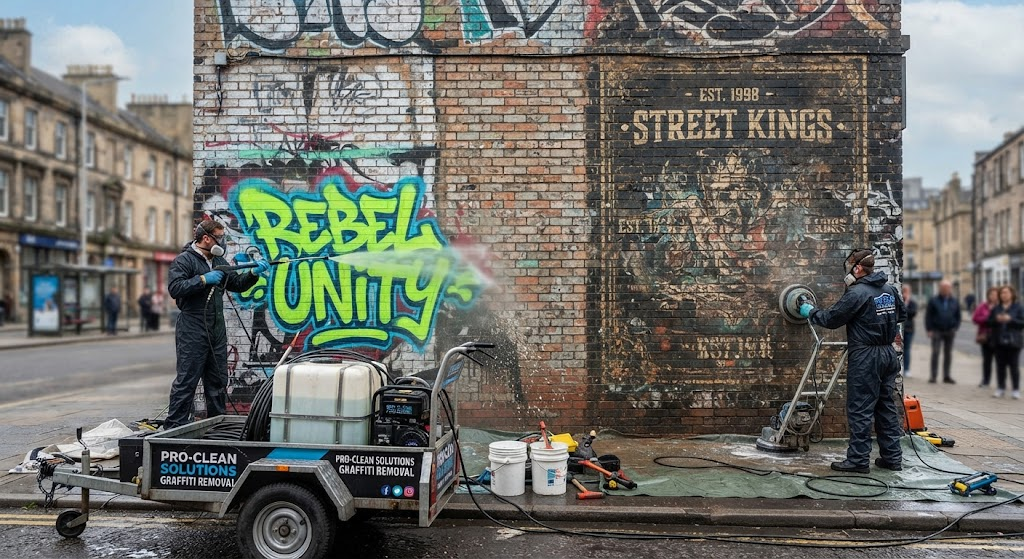
Graffiti removal depends less on a single powerful product than on the age of the mark, the surface beneath it, and the care taken during cleaning. Fresh paint may lift with a mild treatment, while long-standing marks can penetrate masonry or leave permanent traces if removal is too aggressive. The techniques below explain how to choose, apply, and follow up on a method that protects both the property and its surroundings.
Assess The Mark Before Choosing a Removal Method
Start by identifying the surface and the marking medium. Spray paint, permanent marker, stickers, and etched marks behave differently; brick and unsealed concrete absorb pigment, while glass and metal usually hold it at the surface. Age matters too, since cured paint is harder to lift and may leave a faint “ghost” even after cleaning.
Before treating the full area, photograph the mark, protect nearby plants and drains, and test the chosen product on a discreet patch. Wear suitable gloves and eye protection, follow the product’s safety directions, and never mix cleaners. A careful test can reveal whether the treatment removes paint or damages the original finish.
Match Fresh And Long-Standing Marks To The Right Technique
Fresh paint often responds to a mild, surface-appropriate cleaner and prompt rinsing. On nonporous materials, a compatible chemical graffiti remover or solvent-based cleaner may loosen paint with limited scrubbing; glass may also need a carefully angled razor scraper. Keep acetone away from plastics and vinyl, where it can cloud or soften the material.
For old graffiti removal on porous brick or stone, a gel or poultice can hold cleaner against the mark and draw pigment from the pores. This form of masonry cleaning typically pairs chemical treatment with a controlled, low-pressure rinse. A paint stripper should only be used when its label confirms compatibility with the substrate and existing finish.
Methods vary in speed, residue, and surface risk. This comparison helps narrow the options before testing:
| Method | Best suited to | Main caution |
|---|---|---|
| Mild cleaner or solvent wipe | Fresh paint on compatible smooth surfaces | May harm plastics, vinyl, or painted finishes |
| Gel or poultice | Older marks on porous masonry | Requires dwell time and a test patch |
| Low-pressure hot-water rinse | Removing loosened residue after treatment | High pressure can erode brick and mortar |
| Repainting | Damaged or persistently stained painted surfaces | Primer and finish must match the existing coating |
Use Pressure Washing And Blasting With Care
Pressure washing is not a universal shortcut. On masonry, high-pressure water can roughen brick faces and erode mortar, especially when paint has not first been softened. Professionals generally use chemical pretreatment followed by a controlled rinse; abrasive blasting may be appropriate in selected cases, but can scar softer materials.
Dry-ice or baking-soda blasting can suit some hard surfaces, but specialist equipment and trained operators are often needed. Whatever the method, collect rinse water where required and prevent pigment or cleaning agents from entering storm drains.
Protect The Surface After Removal
Rinse or neutralize the treated area as directed, then check for discoloration, residue, or remaining pigment once it dries. If a mark persists, repeat a gentle treatment rather than immediately increasing pressure or abrasion. Historic façades, large areas, high elevations, and etched glass merit specialist assessment before work begins.
An anti-graffiti coating can make future cleaning easier on frequently targeted surfaces. Sacrificial coatings are renewed after removal, while permanent systems remain in place and require compatible cleaners. The right choice depends on the substrate and maintenance plan.
A practical removal sequence keeps the work controlled and repeatable:
- Identify the surface, mark type, and approximate age before selecting a cleaner.
- Test the method on an inconspicuous patch and check for finish damage.
- Apply the least aggressive effective treatment, observing its stated dwell time.
- Rinse carefully, contain runoff where necessary, and inspect the dry surface.
- Consider professional help when the substrate is historic, fragile, or extensively marked.
Effective graffiti removal balances speed with restraint: act promptly on fresh marks, use patient treatment for cured paint, and protect the underlying material at every stage. When the surface is valuable or the method is uncertain, consult a qualified restoration professional for tailored advice and safe intervention.
