
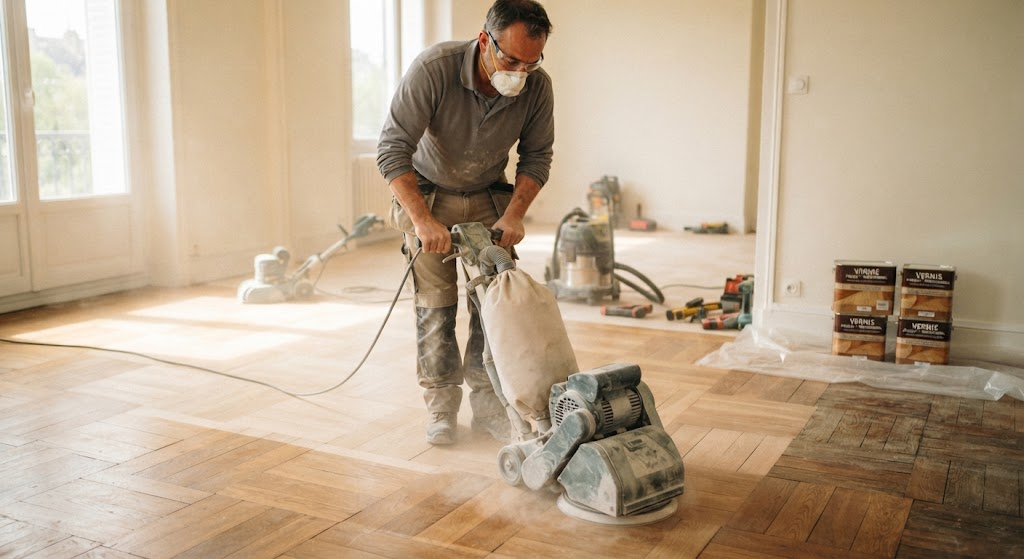
Hardwood floor buffing is most useful where daily movement, tracked-in grit, and shifting furniture gradually dull the finish. Knowing which areas benefit most helps direct attention where it can make the greatest difference while avoiding unnecessary work elsewhere.
Entryways and Hallways That Take Daily Wear
The entryway and foyer receive shoes, grit, moisture, and frequent foot traffic, making them among the first parts of a home to lose their even appearance. Hallways also collect repeated wear along narrow walking paths, where small surface scuffs can build up over time.
Regular cleaning helps prevent abrasive dirt from scratching the finish, while buffing can refresh dull areas if the protective coating remains intact. Rugs near exterior doors can reduce tracked-in debris, but they should be suitable for hardwood and kept clean.
Kitchens and Dining Rooms With Frequent Activity
Kitchens combine steady foot traffic with the risk of food spills and small splashes. Buffing may improve the appearance of light scuffs and dull finish, but it cannot remove deep damage or reverse moisture-related problems; spills should be wiped promptly and the floor cleaned with products made for hardwood.
Dining rooms experience a different kind of wear: chairs slide repeatedly across the same areas. Felt pads beneath furniture legs help limit scratches, while occasional buffing can even out minor marks before they become more noticeable.
| Area | Typical wear | Helpful care |
|---|---|---|
| Kitchen | Foot traffic, spills, and surface dullness | Prompt cleanup and hardwood-safe cleaning |
| Dining room | Chair movement and localized scuffs | Felt pads and careful furniture handling |
| Entryway | Grit, moisture, and concentrated traffic | Clean entrance rugs and frequent sweeping |
Living Rooms and Family Rooms With Shared Use
A living room or family room often serves several purposes, from conversation to play and relaxation. The broad, visible floor area can make fading sheen or scattered surface scuffs especially apparent, so buffing may be worthwhile when routine cleaning no longer restores a consistent look.
Furniture placement also affects wear: pathways between seating, doors, and adjoining rooms tend to receive more use than areas beneath rugs or tables. Rotating rugs where practical can help distribute exposure, while choosing the right buffing pad and finish product protects the existing coating.
Because these rooms are often connected to hallways and kitchens, a consistent maintenance approach can make the whole floor feel more uniform rather than refreshing one isolated patch.
Bedrooms, Home Offices, and Staircases With Specific Needs
Bedrooms usually see less traffic, so their floors may need buffing less often than busy shared spaces. A home office can develop concentrated wear around a desk chair; a chair mat designed for hardwood or soft wheels can reduce repeated abrasion.
Staircases deserve careful attention because each tread receives concentrated footfall and must remain safe underfoot. Buffing is suitable only when the finish is sound and the process will not leave a slippery surface; a flooring professional can recommend an appropriate treatment for the finish and stair use.
- Consider buffing when the finish looks dull or has light surface scuffs but remains continuous.
- Clean thoroughly first so grit is not dragged across the floor during the process.
- Choose a hardwood-compatible pad and product, and test the method in an inconspicuous area.
- Seek professional assessment for peeling finish, deep gouges, exposed wood, or persistent discoloration.
Hardwood floor buffing can restore a smooth, polished appearance while helping maintain the beauty and durability of wood flooring throughout the home. From living rooms and hallways to dining areas and bedrooms, regular care can keep high-traffic spaces looking fresh and well maintained. Hardwood floor professionals can also assess the condition of the flooring and recommend the right maintenance approach for lasting results.